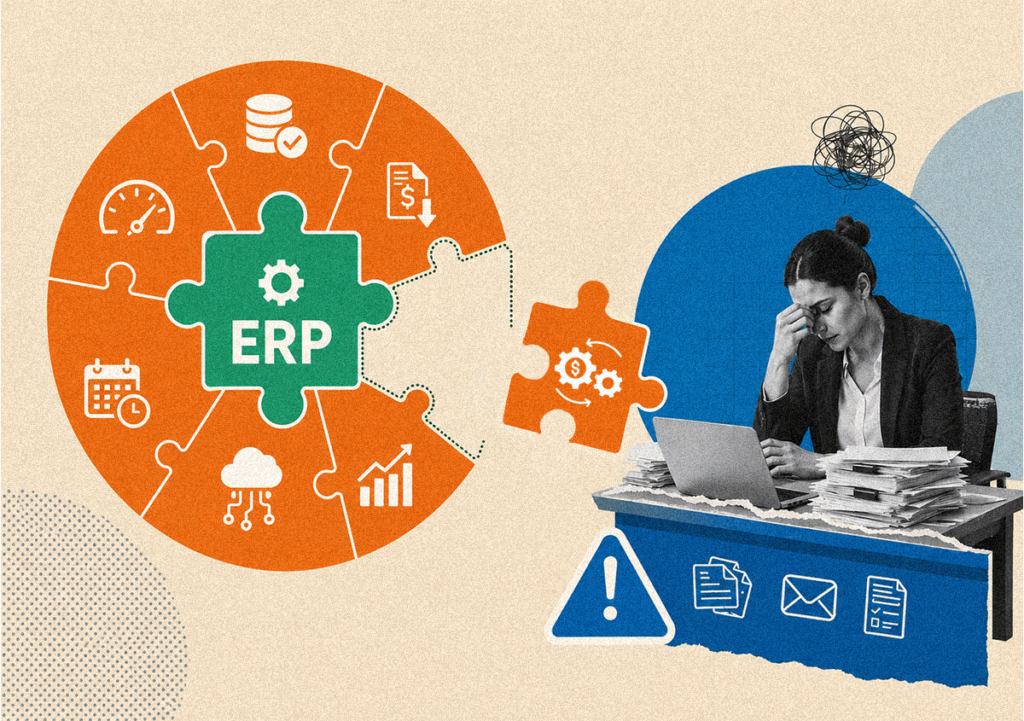
There’s a version of financial management that most organizations are still running: month-end closes that reveal surprises, budget variance reports that are always retrospective, and T&E reconciliation that tells you where the money went, never where it’s going. For a CFO navigating today’s economic volatility, that’s not a function of finance. That’s financial archaeology.
The shift from reactive to predictive corporate spend management is one of the most significant operational transformations available to Finance leaders right now. And it’s being driven not by new accounting principles or regulatory changes, but by the intelligence now embedded in modern T&E automation and expense management platforms.
This is the story of how the best Finance teams in 2026 have turned their automated expense management data into a genuine strategic forecasting engine, and what it takes to get there.
Why “Tracking” Was Never Enough
Ask most Finance Directors what their current expense tool does, and the answer will involve some version of: “It tracks what employees spend, generates reports, and feeds into our ERP.” That’s accurate, and insufficient.
The fundamental limitation of traditional corporate expense management platforms is that they were designed for documentation, not decision-making. They answered the question “what happened?”, not “what’s about to happen, and what should we do about it?” By the time a CFO sees Q3’s T&E overage in a monthly report, the money is already gone. The approval workflow is closed. The opportunity to intervene has passed.
According to a 2024 McKinsey study on finance function transformation, companies that shift from descriptive to predictive finance analytics reduce budget variance by an average of 23% and improve cash flow forecasting accuracy by up to 31%. The gap between organizations that are doing this and those that aren’t is widening quickly.
The Data Goldmine Hiding in Your T&E Platform
Here’s something most organizations don’t fully appreciate: your business travel expense management platform is sitting on one of the richest real-time datasets in your entire enterprise. Every booked flight, every hotel check-in, every client dinner charged to a corporate card. These are not just expense records. These are behavioral and operational data points that, when aggregated and analyzed correctly, reveal patterns of extraordinary strategic value.
Consider what you can learn from properly analyzed corporate spend management data:
- Sales activity correlation: When travel expenses for your sales team spike in a particular region, it often precedes a pipeline expansion in that geography. Smart Finance teams use this to pre-position resources.
- Vendor concentration risk: Aggregated expense invoice data reveals when your organization has become disproportionately dependent on a single airline, hotel chain, or service provider – creating negotiation leverage and risk mitigation opportunities.
- Seasonal spend patterns: Historical T&E data across multiple years surfaces predictable peaks and troughs in business travel. This enables more accurate quarterly budget allocation, months before the spend occurs.
- Departmental efficiency benchmarking: When you can compare the average cost-per-client-visit across your entire sales force, underperformers become visible not through subjective assessment but through objective spend data.
None of this is possible with a legacy travel expenses app that simply stores and displays transaction records. It requires an intelligent corporate expense management layer that can surface patterns, model scenarios, and translate data into decisions.
What Predictive Spend Analytics Actually Looks Like
Let’s get specific. What does a predictive T&E automation platform actually deliver to a CFO in practice?
Forward-Looking Budget Modeling
The most impactful capability is the ability to project future spend based on current booking data and historical patterns. When your travel expense solutions platform integrates with your online booking system, it knows in real time that 47 employees have flights booked to the same conference next month, that 12 of them have reserved hotel rooms above the policy rate, and that based on last year’s same event, the average attendee spent $340 on meals and ground transport. The system can project the total cost of that event with high accuracy weeks before it occurs and alert the Finance team if it’s tracking above budget.
This isn’t a futuristic concept. Platforms like ExpenseAnywhere are delivering exactly this capability today, with pre-trip approval workflows that capture committed spend before it becomes actual spend, giving CFOs the ability to intervene at the right moment.
Real-Time Accrual Intelligence
One of the most painful aspects of traditional automated expense management is the gap between when expenses are incurred and when they hit the books. Employees submit expense reports weeks after trips. Finance teams spend the last days of every quarter scrambling to estimate accruals for outstanding submissions. The result: inaccurate financial statements, restated figures, and frustrated auditors.
Predictive spend analytics closes this gap. By combining real-time corporate card transaction data, open trip bookings, and AI-modeled submission timing (based on each employee’s historical submission patterns), the system can estimate outstanding accruals with significantly greater accuracy. For public companies and those under strict audit scrutiny, this capability alone can justify the entire investment in a modern travel expense app.
Scenario Planning and Sensitivity Analysis
What happens to your T&E budget if the sales team adds 15 new territories? What’s the projected spend impact of shifting from domestic to international conferences? A modern business travel expense management platform with predictive capabilities can model these scenarios using your actual historical data, giving Finance and business leaders a fact-based foundation for strategic decisions, rather than educated guesses.
Building the Infrastructure for Predictive Intelligence
Predictive spend analytics doesn’t arrive out of the box on day one. It’s built on a foundation of data quality, integration depth, and policy consistency, all of which a well-implemented corporate spend management platform provides.
The prerequisites are straightforward but non-negotiable. Data completeness: every expense must be captured, categorized, and coded correctly. This requires an expense tool with intelligent auto-categorization, not manual entry. In terms of integration, your travel expense solutions platform must be connected to booking systems, corporate card networks, HR databases, and ERP, so data flows automatically without gaps. And policy consistency: machine learning models are only as good as the data they’re trained on. Inconsistent policy enforcement creates noisy data that undermines predictive accuracy.
According to Gartner’s 2024 CFO Agenda Survey, 68% of finance leaders identified data quality as the number one barrier to effective predictive analytics. The irony is that the same platform designed to capture and process expense data, implemented correctly, is the solution to the data quality problem.
The CFO’s Competitive Advantage
There’s a broader strategic point worth making here. In a business environment where margins are under pressure, talent is expensive, and capital allocation decisions carry real consequences, the CFOs who have real-time visibility into committed and projected spend have a genuine competitive advantage over those still working from last month’s reports.
Organizations using predictive corporate expense management analytics have reported: 30-40% reductions in budget overage frequency; significantly faster monthly and quarterly closes due to more accurate accrual estimates; and measurably improved negotiating positions with travel vendors through aggregated spend data visibility.
The shift from reactive to predictive isn’t a technology project. It’s a finance transformation. And the entry point – a modern, intelligent T&E automation and automated expense management platform – is more accessible than most Finance leaders realize.
The question for every CFO in 2026 isn’t whether to make this shift. It’s how quickly you can afford not to.
FAQs
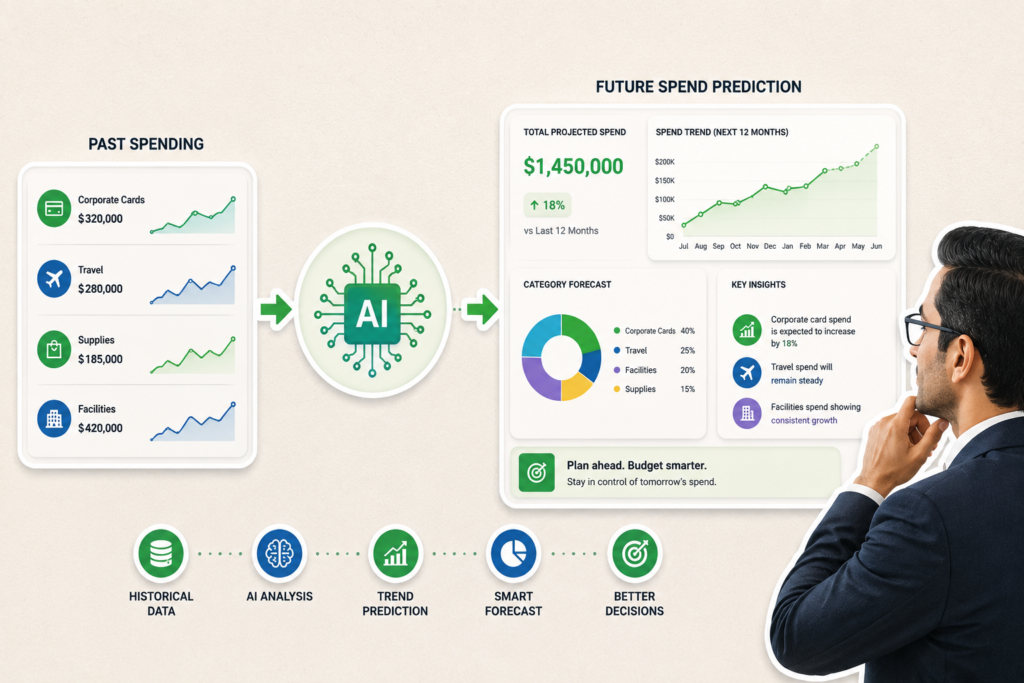
Predictive spend analytics uses historical expense data, real-time transaction feeds, and AI modeling to forecast future spend, rather than simply reporting on past expenses. In a corporate spend management platform, this means projecting budget utilization, flagging upcoming overages, modeling scenario impacts, and providing Finance leaders with actionable intelligence before money is spent.
A T&E automation platform improves forecasting accuracy by capturing committed spend at the point of booking (before it becomes actual spend), providing real-time visibility into open expense reports, and modeling expected submissions based on historical employee behavior. Integrated with ERP systems, this data feeds directly into financial planning models, replacing estimates with actual committed figures.
Not entirely replace but dramatically improve. Automated expense management platforms with real-time card feeds and AI-modeled submission timing can estimate outstanding accruals with significantly higher accuracy than manual processes. This reduces close-cycle time and improves the reliability of interim financial statements, especially important for public companies and those under external audit.
To enable full predictive capability, a travel expense solutions platform needs integrations with corporate card networks (for real-time transaction feeds), online travel booking systems (for committed spend capture), ERP/accounting systems (for GL and cost-center data), and HR platforms (for policy and organizational hierarchy data). The richness of predictive insight is directly proportional to the depth of these integrations.
Most organizations begin seeing basic trend reporting immediately, with more sophisticated predictive modeling becoming reliable after 6-12 months of clean data accumulation. Platforms that integrate with historical data from legacy systems can accelerate this timeline. The key success factor is data completeness from day one, which is why choosing an expense tool with strong auto-categorization and policy enforcement from the outset matters enormously.