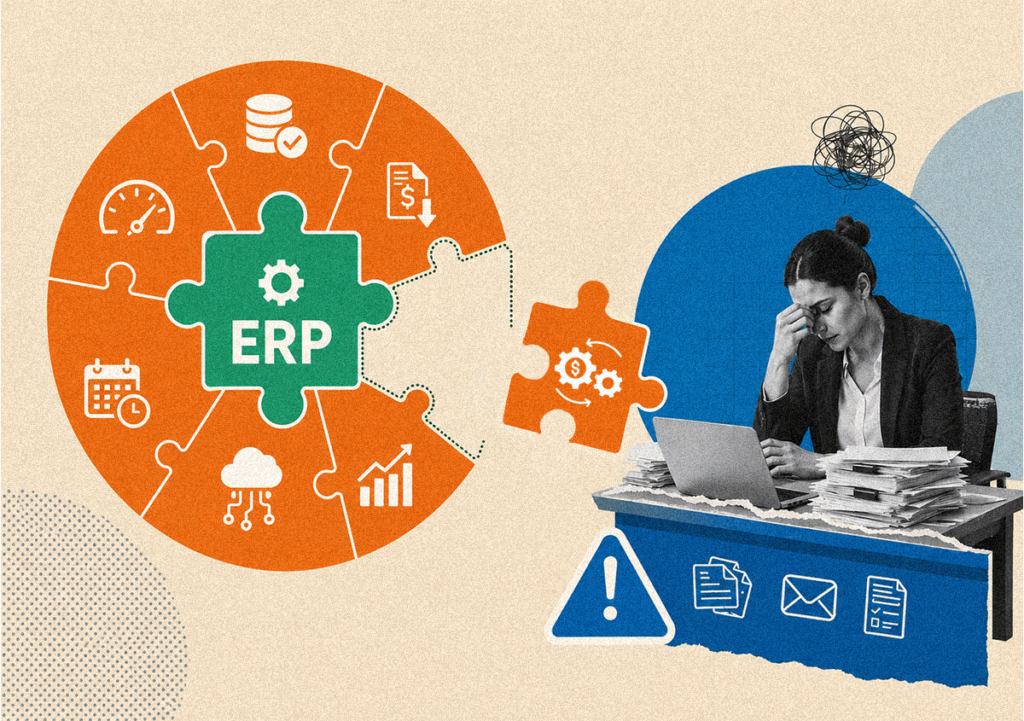
Here’s a question worth asking honestly: Does your finance team actually know, in real time, what your company is spending money on?
Not in a month, after the books close. Not after the expense reports are finally processed. Not after AP reconciles the invoices. Right now, today, what is your company spending, with whom, and against which budgets?
For most organizations, the honest answer is ‘not entirely.’ And that gap between what’s actually being spent and what finance can see is exactly what corporate spend management is designed to close.
Defining Corporate Spend Management
Corporate spend management is the practice of gaining visibility into, controlling, and optimizing every dollar a company spends across all categories, departments, geographies, and vendors. It encompasses the people, processes, policies, and technologies that govern how money flows out of an organization.
This is broader than most people initially assume. Corporate expense management typically brings to mind employee expenses such as hotel stays, flights, and meals. And that’s certainly part of it. But corporate spend management in its fullest sense includes supplier invoice payments, procurement of goods and services, operational purchasing, corporate card programs, prepaid card management, employee mileage reimbursements, and more.
According to a PwC analysis, companies that implement comprehensive spend management programs reduce controllable spend by 5-10% and reduce procurement operating costs by 15-25%.
Why Corporate Spend Management Has Become a Strategic Priority
Spend management used to live in the back office. It was a compliance and cost-control function, important, but not strategic. That’s changed significantly in the past decade, driven by several converging forces.
1. Spend Complexity Has Exploded
Modern companies operate across more vendors, more geographies, more currencies, and more cost categories than ever before. A mid-market company might have hundreds of active vendors, dozens of corporate card holders, field employees in multiple countries, and operational purchasing happening at distributed locations. Managing that complexity manually is simply not feasible.
2. CFOs Are Under Pressure to Do More with Less
Post-pandemic, CFOs have been asked to simultaneously cut costs, improve efficiency, and maintain growth, often with smaller finance teams. Spend management platforms allow lean finance teams to maintain control over significantly higher transaction volumes without adding headcount.
Gartner research finds that finance organizations leveraging advanced spend management technology reduce their cost per finance transaction by an average of 42% versus peers using manual processes.
3. Regulatory and Audit Requirements Have Intensified
Whether it’s GDPR in Europe, SOX compliance in the US, or industry-specific regulations in healthcare (HIPAA) and financial services, the bar for financial documentation and audit readiness has risen dramatically. Manual spend processes can’t reliably produce the audit trails that regulators expect.
The Four Pillars of an Effective Spend Management Platform
Pillar 1 – Travel and Expense Automation (Corporate Travel and Expense Management)
Corporate travel and expense management covers employee-incurred costs: flights, hotels, meals, mileage, and client entertainment. An effective spend management solution automates the entire T&E lifecycle from pre-trip approval through booking, receipt capture, policy validation, approval workflow, and reimbursement.
The key metric here is policy compliance rate.
According to the GBTA, companies with automated T&E tools achieve an average policy compliance rate of 89%, compared to 62% for companies using manual processes.
That gap directly translates to cost savings.
Pillar 2 – Accounts Payable and Invoice Automation
Supplier invoice management is often the highest volume spend category. AP automation, sometimes called accounts payable automation or automated invoice processing, handles the flow of supplier invoices from receipt through validation, PO matching, approval, and payment.
A mature AP automation function processes invoices with minimal human touchpoints, captures early payment discounts systematically, and provides real-time visibility into outstanding payables and cash flow requirements.
Pillar 3 – Procurement and Operational Spend
This includes both strategic procurement (managing vendor relationships, negotiating contracts, issuing purchase orders) and operational purchasing (day-to-day low-dollar spend). For operational spend, prepaid card programs managed through a platform like PurchaseAnywhere® provide a cost-effective way to control distributed spending without the overhead of traditional purchase order processes.
The hidden cost of operational spend is often underestimated. Processing a single low-value purchase order can cost $40-$80 in administrative time. Prepaid cards with automated reconciliation eliminate most of that cost.
Pillar 4 – Analytics and Spend Visibility
All the automation in the world is less valuable without actionable intelligence. A robust spend management platform delivers real-time dashboards and analytics that show spend by category, vendor, department, cost center, geography, and time period, enabling finance leaders to identify waste, benchmark against budgets, and make data-driven decisions.
This is the level of visibility that transforms spend management from a control function into a strategic one. When a CFO can see that travel spend in the Northeast region is running 30% over budget, or that a particular vendor category is growing faster than revenue, they can act before problems compound.
SaaS Spend Management: Why Cloud-Based Is the Standard
The shift to SaaS spend management has been rapid and decisive. Cloud-based platforms offer several advantages over on-premise solutions: faster deployment, automatic updates, lower IT overhead, and the ability to access spend data from anywhere. For companies with distributed workforces or international operations, cloud-based accessibility is essential.
According to IDC, cloud-based financial management applications (including spend management) are growing at a CAGR of 14.7%, driven by the need for real-time visibility and scalability.
Building a Business Case for Spend Management Investment
Finance leaders know that technology investments need to justify themselves. For spend management, the ROI case is typically strong and relatively fast to demonstrate.
Direct savings come from reduced processing costs (T&E automation reports, invoices), captured early payment discounts, reduced fraud and duplicate payments, and VAT/tax reclamation. Indirect savings come from freed-up finance team capacity, faster month-end close, reduced audit costs, and improved vendor relationships.
A commonly cited benchmark: companies that implement comprehensive spend management solutions achieve payback periods of 12-18 months, with ongoing annual savings of 3-8% of managed spend. For a company spending $50 million annually across T&E and procurement, that represents $1.5-$4 million in annual savings.
What to Look for in a Corporate Spend Management Solution
When evaluating spend management solutions or corporate spend management platforms, finance leaders should look for these key capabilities:
- Unified platform coverage like T&E, AP, P-Card, and mileage tracking in a unified way
- Deep ERP integration with your existing financial systems
- Global capability, including multi-currency, multi-language, and country-specific tax compliance
- AI-powered automation with adaptive machine learning
- Configurable policy engine
- Real-time analytics and reporting
- Mobile access for employees and approvers
- Enterprise-grade security compliance (SOC2, PCI-DSS, GDPR, HIPAA)
FAQs
Corporate spend management is the systematic practice of controlling, tracking, and optimizing all company expenditures, including employee expenses, supplier invoices, procurement, and operational spending. It matters because unmanaged spend directly erodes profitability, creates compliance risk, and limits the visibility finance teams need to make good decisions.
Corporate expense management typically refers specifically to employee travel and expense management – receipts, reimbursements, and policy compliance. Spend management is a broader term that encompasses all corporate expenditures, including supplier invoices, procurement, operational purchasing, and card programs, managed through a unified spend management platform.
A spend management platform is an integrated software solution that automates and provides visibility into all categories of corporate spending. It typically includes modules for travel and expense, accounts payable, procurement, P-Card management, and analytics, all connected through a common data model and policy engine.
Mid-market companies benefit from cloud-based SaaS spend management solutions that are scalable without enterprise-level implementation complexity. The best solutions offer deep ERP integration, configurable workflows, and comprehensive analytics, delivering enterprise-grade functionality at a cost and deployment timeline appropriate for growing businesses.
Corporate travel and expense management is one of the largest and most visible spend categories for most companies. When integrated into a unified spend management platform, T&E data flows alongside invoice, procurement, and card data, giving finance leaders a complete picture of total corporate spend rather than siloed category views.