In the previous blog, we traced e-procurement software’s evolution from expensive EDI systems to today’s AI-powered platforms. But understanding history only gets you so far. The real question is: why has e-procurement software suddenly become non-negotiable for organizations in 2026?
The answer lies in a perfect storm of forces: tariff volatility creating supply chain chaos, sustainability mandates demanding detailed reporting, AI capabilities delivering unprecedented ROI, and a fundamental shift in what procurement means to modern organizations. According to ResearchAndMarkets, this isn’t just about efficiency anymore; it’s about survival.
Let’s dive into what’s really happening, what the data reveals about who’s winning, and how smart organizations are turning e-procurement software into a strategic advantage.
The Tariff Crisis: When Manual Procurement Breaks
2025’s Wake-Up Call
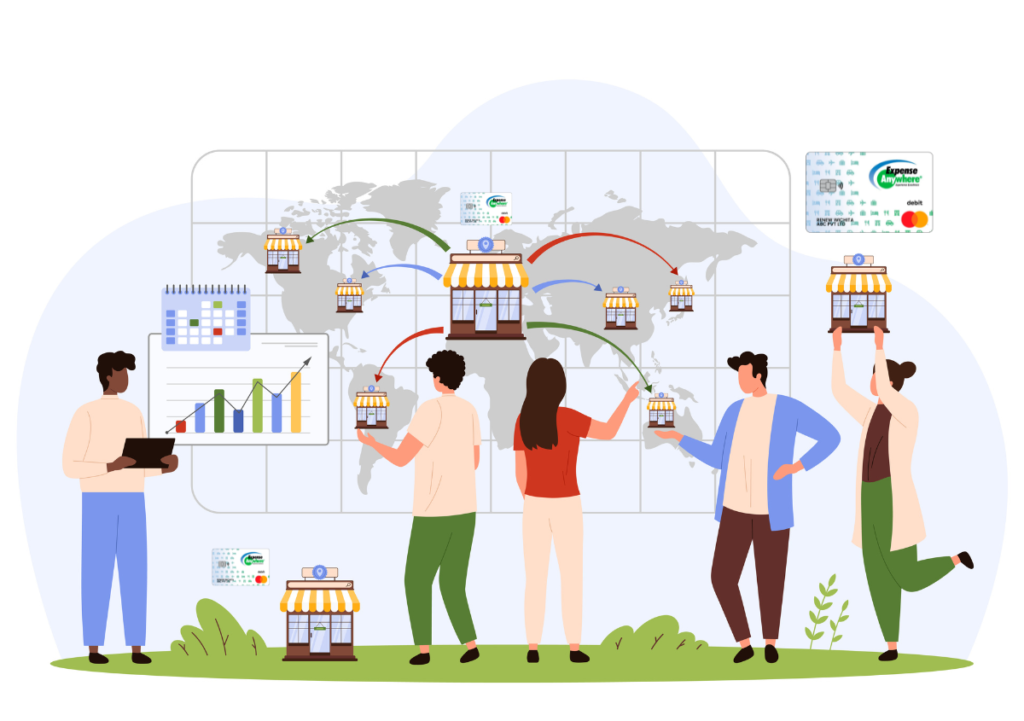
The ResearchAndMarkets study dedicates an entire section to how 2025 U.S. tariff actions are ‘accelerating demand for adaptive purchasing controls, auditable decisions, and rapid supplier substitution capabilities.’ If that sounds like corporate speak, let me translate. Tariffs are breaking traditional procurement, and organizations without modern software are hemorrhaging money.
Here’s what actually happens when tariffs change:
Monday morning: New tariffs announced on Chinese electronics. Your landed costs just increased 15-25%.
Monday afternoon: Your procurement team scrambles to identify which products are affected, which suppliers are impacted, and what alternatives exist.
Tuesday: You need to renegotiate supplier contracts, adjust internal pricing, and redirect purchasing to approved alternatives.
Wednesday: Finance demands documentation proving you evaluated alternatives and minimized impact. Legal needs audit trails. Business units want to know when they can order again.
Thursday: You discover that despite all your communications, half your organization is still buying from the tariffed suppliers because they don’t know about the approved alternatives.
With manual processes or legacy systems, this cycle can take weeks, and during that time, you’re losing money on every purchase. With modern e-procurement software, it takes minutes.
What Adaptive Procurement Actually Means
Modern e-procurement platforms don’t just track purchases; they enforce policy automatically:
- Dynamic catalog management: When tariffs hit, you update approved supplier lists once. The system instantly redirects all purchasing organization-wide. No emails. No confusion. No maverick buying.
- Country-of-origin tracking: You can identify every product affected by regional tariffs in seconds, not weeks. Better yet, you can proactively monitor tariff discussions and model the impact before changes hit.
- Complete audit trails: Every sourcing decision is documented automatically. When finance or auditors ask, ‘Why did we switch suppliers?’, you have instant answers backed by data.
- Scenario planning: AI-powered platforms can model ‘what if’ scenarios. What if tariffs expand to semiconductors? What if European regulations tighten? You can test strategies before committing.
The AI Transformation: From Reactive to Predictive Procurement
The Numbers That Changed Everything
According to AI at Wharton, weekly use of generative AI within procurement functions increased by 44 percentage points from 2023 to 2024. Today, 94% of procurement executives use AI at least weekly. That’s not adoption, that’s transformation.
Deloitte’s 2025 Global CPO Survey reveals where executives see the greatest GenAI value:
- Enhanced decision-making: 67.68%
- Improved productivity: 49.43%
- Better spend management: 31.56%
- Cost optimization: 28.90%
Notice what tops the list? Enhanced decision-making. Not cost savings. Not efficiency. Decision-making. Because AI in procurement isn’t replacing people; it’s making them exponentially smarter.
What AI Actually Does in Modern E-Procurement
Forget the hype. Here’s what AI is actually doing in production e-procurement systems right now:
- Demand Forecasting That Actually Works
Traditional demand planning relied on historical averages and gut feel. AI combines internal consumption patterns with external market data, weather forecasts, economic indicators, and social media trends to predict needs with unprecedented accuracy.
- Price Optimization in Real-Time
Machine learning algorithms analyze historical pricing, current market conditions, supplier quotes, and cost structures to recommend optimal pricing that maximizes savings while maintaining quality.
- Risk Detection Before It Becomes a Crisis
AI systems continuously monitor supplier financial health, geopolitical events, social media sentiment, logistics disruptions, and performance trends. When a supplier’s credit rating drops, when political instability emerges in a source country, when delivery performance starts degrading, you get alerts before the problem cascades. Organizations using AI-based risk management saw 25% reductions in procurement fraud in 2025.
- Contract Intelligence That Saves Weeks
Natural language processing extracts key clauses from contracts, flags non-standard terms, identifies compliance issues, and suggests optimizations based on your contract database and industry benchmarks. Some systems can now draft entire contracts based on templates and requirements, cutting contract processing time by up to 70%.
- Spend Analytics That Find Hidden Money
Instead of manually categorizing expenditures, AI automatically classifies spending, identifies duplicate suppliers, spots pricing anomalies, and surfaces consolidation opportunities that human analysts would never find in massive datasets.
Market Segmentation: Finding Your Procurement Match
Organization Size: It’s Not Just About Volume
The research distinguishes between large enterprises and SMEs, but the real differences are more nuanced than procurement spend:
Large Enterprises Need:
- Multi-entity support with entity-based approval hierarchies
- Deep ERP integration across multiple systems and geographies
- Advanced supplier management with tier-n visibility
- Extensive customization and API extensibility
- Sophisticated analytics with custom dashboards
- Dedicated implementation teams and ongoing support
SMEs Prioritize:
- Rapid deployment with packaged best practices
- Intuitive interfaces requiring minimal training
- Predictable pricing that scales with growth
- Pre-built integrations with popular accounting platforms
- Strong vendor support and implementation services
- Immediate ROI and quick wins
Interestingly, the generative AI market for procurement is growing at 29.3% annually, and both segments are investing heavily. The difference isn’t whether to adopt AI; it’s how. Large enterprises pilot broadly before standardizing. SMEs often achieve faster ROI by focusing AI on high-impact processes like invoice automation and spend analytics.
Industry Verticals: Why Context Matters
The study identifies five key verticals, each with distinct priorities that shape platform selection:
Financial Services: Regulatory compliance dominates. Audit trails, segregation of duties, and tight financial controls aren’t nice-to-haves; they’re mandatory.
Healthcare: Supply continuity is life-or-death. Platforms need supplier redundancy, rapid qualification for emergency sourcing, and specialized compliance tracking for medical devices and pharmaceuticals.
Manufacturing: Direct materials drive different requirements than indirect spend. Tight integration with production planning, inventory, and quality systems isn’t optional; it’s how manufacturing works.
Retail: Thin margins and seasonal volatility demand extreme cost optimization and rapid decision-making. E-procurement software must support dynamic supplier switching without breaking operations.
IT/Telecom: Technology refresh cycles and complex vendor relationships require sophisticated contract management, software license tracking, and subscription management.
Generic e-procurement software can handle basic purchasing in any industry. But industry-specific requirements – regulatory, operational, contractual – often determine success or failure. Choose platforms with proven experience in your vertical.
The Procure-to-Pay Connection: Why Purchasing Is Just One Piece
Here’s what the market research doesn’t tell you, but every procurement professional knows. E-procurement purchasing systems only deliver full value when they connect to the broader procure-to-pay lifecycle.
Think about it: What good is a perfectly executed purchase order if
- the contract it references is stored in some legal folder nobody can find?
- the invoice matching process still requires manual intervention?
- the supplier performance data lives in a different system?
- the sourcing decision that led to that supplier isn’t documented?
- payment processing breaks because finance can’t verify receipt?
Modern procure-to-pay platforms integrate the entire value chain:
Strategic Sourcing → Contract Management → Purchasing → Receiving → Invoicing → Payment
When this integration works properly,
- negotiated terms automatically flow into purchasing catalogs.
- every purchase links back to its source contract, enabling compliance measurement.
- invoice matching happens automatically because PO data is complete and accurate.
- spend analytics span the full process, not just individual stages.
- supplier performance tracking connects sourcing promises to delivery reality.
- audit trails are complete from the strategic decision through payment.
This is where e-procurement software’s strategic value truly emerges, not just in processing transactions faster, but in connecting procurement data across the entire value chain to drive better business outcomes.
Organizations evaluating e-procurement software should ask:
Does this platform integrate upstream to sourcing and downstream to payment? Or will we create new data silos while solving purchasing?
Looking Forward: The Next Five Years of Procurement
Autonomous Procurement Agents
The Hackett Group’s research distinguishes between AI ‘assistants’ (helping humans complete tasks) and ‘agents’ (working autonomously). By 2030, expect autonomous agents to handle routine procurement completely: monitoring inventory, predicting needs, sourcing options, negotiating terms, placing orders, reconciling invoices, all without human intervention except for strategic decisions and exceptions.
This isn’t science fiction. Early versions are already operating in tail-spend categories, processing thousands of low-value purchases with minimal oversight. The savings aren’t just in labor; they’re in speed, accuracy, and the ability to optimize every single transaction.
Real-Time Everything
Industry experts predict that within five years, procurement will operate in real-time: catalog pricing updating automatically based on market conditions, risk monitoring flagging issues instantly, and AI bots conducting 24/7 negotiations on commoditized categories. The distinction between ‘procurement systems’ and ‘business intelligence platforms’ will blur as every procurement action generates actionable data.
Embedded Sustainability
With 66% of procurement leaders citing ESG requirements as a major strategic driver, future platforms will embed sustainability metrics throughout workflows. Every sourcing decision will surface carbon intensity, ethical sourcing scores, and diversity impact. Sustainability won’t be an add-on report; it’ll be native decision criteria alongside cost and quality.
Supply Chain Digital Twins
McKinsey’s vision of procurement digital twins – comprehensive models of supplier networks from tier-n through to customers – will become standard. These models will run continuous simulations, testing resilience under various scenarios: semiconductor price spikes, port closures, tariff changes, and supplier financial distress. Risk management will shift from reactive to predictive.
The Bottom Line: Your Move
The e-procurement software market isn’t growing at 7.37% annually because companies want faster purchase orders. It’s growing because procurement has become strategic, and strategy requires data, automation, and intelligence that manual processes simply cannot provide.
Tariff volatility is forcing rapid adaptation. AI capabilities are delivering measurable ROI. Sustainability mandates are demanding detailed reporting. And competitive pressure is making procurement excellence a prerequisite for market leadership.
Organizations that treat e-procurement software as an operating model change rather than a technology installation, those that embed policy into user experience, invest in data governance, scale through integration, and measure strategic outcomes, are the ones achieving durable procurement performance.
The question facing procurement leaders in 2026 isn’t whether to modernize. It’s how quickly you can transform procurement from a cost center into a data-driven, AI-enabled, strategically aligned function that your organization desperately needs.
Because while technology has evolved dramatically, the competitive environment has evolved even faster. And in that race, standing still means falling behind.
FAQs
It is no longer just about efficiency; it is about survival in a "perfect storm" of global forces. Rapidly shifting tariff volatility, strict global sustainability mandates, and the need for AI-driven decision-making have made manual procurement processes a multi-million-dollar liability.
Modern platforms use adaptive purchasing controls to instantly redirect organization-wide buying to approved, non-tariffed alternatives the moment trade policies change. They provide country-of-origin tracking and AI-powered scenario planning to model the financial impact of potential tariff shifts before they even hit your bottom line.
AI has transformed procurement from reactive to predictive. Organizations using AI-based risk management saw a 25% reduction in procurement fraud in 2025. Additionally, natural language processing can cut contract processing time by up to 70% while identifying hidden savings in massive spend datasets that human analysts might miss.
Industry context determines success. For example, Healthcare requires rapid supplier qualification for life-or-death continuity, while financial services must prioritize regulatory audit trails and strict financial controls. Manufacturing demands deep integration with production planning and inventory systems to manage direct materials effectively.
A standalone system often creates data silos. A full procure-to-pay platform integrates the entire value chain, from strategic sourcing and contract management to payment. This ensures negotiated terms flow automatically into catalogs and that invoice matching happens instantly because the PO data is 100% accurate.