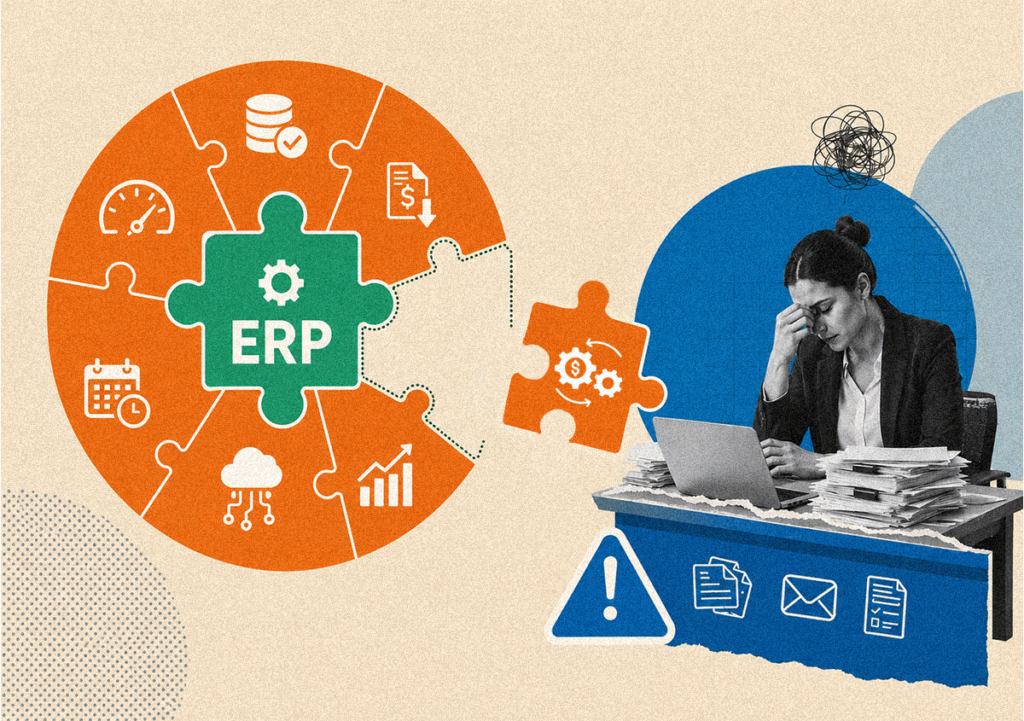
Imagine running a relay race where the first runner sprints beautifully, but instead of passing the baton to the second runner, they throw it into a hedge. The second runner then has to spend twenty minutes searching the bushes before they can start running.
This sounds ridiculous, but it is an accurate description of how the procure-to-pay process works in most organizations today.
Procurement (the first runner) negotiates a great deal. Accounts payable (the second runner) pays the bill. But because of the “Silo Effect” – a deep operational disconnect between these two departments, the value is often lost in the handoff.
In 2026, the cost of this disconnect is no longer just “administrative noise.” It is a massive financial hemorrhage. When Finance and Procurement operate in silos, they aren’t just annoying each other; they are actively destroying value through missed discounts, maverick spend, and high processing costs.
The solution isn’t just better meetings; it’s a fundamental structural change driven by procure-to-pay automation. Here is why bridging the gap is the single most profitable move your finance team can make this year.
The Root of the Conflict: Different Maps, Same Journey
Why do these teams clash?
Historically, they have different DNA. Procurement is forward-looking; they want to spend the budget to acquire value. Finance is backward-looking; they want to conserve cash and ensure compliance.
Without finance and procurement alignment, their metrics actively fight each other. Procurement celebrates negotiating a “Net 10” payment term to get a 5% price cut. Meanwhile, AP is incentivized to maximize Days Payable Outstanding (DPO) and ignores the term, paying in 60 days. The supplier gets angry, the discount is revoked, and the savings Procurement “won” never actually hit the P&L.
This friction creates a visibility vacuum. Without total spend visibility, Finance cannot see what is coming down the pipe until the invoice lands, making accurate cash forecasting impossible.
The $12.88 Invoice: The Cost of Manual P2P
The first casualty of the silo is efficiency. In a disconnected environment, data doesn’t flow; it crawls. Purchase orders (POs) are created in one system, emailed to vendors, and then manually keyed into a separate finance system by AP clerks.
The price tag for this inefficiency is shocking. According to Ardent Partners, the average cost to process a single invoice in a manual, non-automated environment is approximately $12.88.
However, organizations that leverage P2P automation to link these teams achieve a radically different result. Best-in-class teams process invoices for just $2.78.
By implementing procure-to-pay process automation, you aren’t just saving a few cents. You are reducing your operational costs by nearly 80%. For a company processing 10,000 invoices a month, that is the difference between spending $1.5 million and $300,000 annually.
The “Maverick Spend” Drain
When finance and procurement alignment is weak, employees go rogue. We call this “Maverick Spend.”
If your procurement process is clunky and disconnected, employees will bypass it. They will buy laptops at retail prices on corporate cards or sign consulting contracts without legal review. Without centralized spend visibility, Procurement has no idea this is happening until AP receives the bill.
Maverick spend typically costs organizations 10% to 20% more than negotiated contract rates. It is a silent leak that drains millions from the bottom line.
Procure-to-pay automation fixes this by creating an “Amazon-like” shopping experience. When the buying process is the path of least resistance, employees comply. This gives you 100% spend visibility, ensuring every dollar spent contributes to your volume leverage for future negotiations.
The 36% Return You Are Missing
Perhaps the most tragic loss caused by the silo is the missed early payment discount. Suppliers often offer terms like “2/10 Net 30” – a 2% discount if you pay in 10 days.
To a non-finance person, 2% sounds small. To a CFO, it is massive. A 2% risk-free return over a 20-day acceleration period is roughly equivalent to a 36% annualized return on your cash. You cannot get that return in the stock market or a high-yield savings account.
Yet, most companies miss this free money. Why? Because manual AP cycles take too long. If it takes you 17 days to process an invoice, the 10-day discount window is gone before you even approve the payment.
P2P automation accelerates cycle times to under five days. It enables finance and procurement alignment on payment strategies, ensuring you capture every single discount available.
Bringing It Together with P2P Automation
So, how do you break the silo?
You cannot just tell people to “collaborate more.” You need a shared digital ecosystem.
Procure-to-pay automation acts as the connective tissue between the two functions. It integrates the entire lifecycle, from the moment an employee requests an item to the moment the payment leaves the bank, into one unified workflow.
Here is what procure-to-pay process automation delivers:
- A Single Source of Truth: No more arguing over whose data is correct. Procurement and AP see the same data in real-time.
- Touchless Processing: The system performs a “3-way match” (comparing the PO, the Receipt, and the Invoice) automatically. If they match, the bill is paid. No human intervention required.
- Real-Time Spend Visibility: The CFO can see committed spend the moment a PO is approved, not weeks later when the invoice arrives.
The Strategic Shift: From Gatekeepers to Architects
When you deploy P2P automation, you change the identities of your teams. Procurement stops being the “forms police” and becomes a strategic sourcing engine. AP stops being data entry clerks and becomes cash flow optimizers.
True finance and procurement alignment turns these cost centers into value generators. By automating the tactical grunt work, you free your best people to focus on strategy, supplier relationships, and fraud prevention.
Conclusion: The Silo is Expensive
The days of Finance and Procurement operating in separate towers are over. The market is moving too fast, and margins are too tight to allow for that level of inefficiency.
The “Silo Effect” is costing you money through high processing fees ($12.88 per invoice), lost discounts, and unchecked maverick spend. The only way to stop the bleeding is to invest in procure-to-pay automation.
By forcing finance and procurement alignment through technology, you gain the spend visibility you need to steer the ship. You stop the leaks. You capture the value. And finally, you ensure that the baton is passed smoothly, every single time.
FAQs
Procure-to-pay automation eliminates manual data entry and physically routing paper. By using OCR and AI to capture data and automatically match invoices to purchase orders, it reduces the cost per invoice from an average of $12.88 (manual) to around $2.78 (automated), generating an 80% operational savings.
Without finance and procurement alignment, the two teams often work against each other. Procurement negotiates payment terms that AP may not honor, leading to friction. Alignment ensures that payment strategies (like capturing early payment discounts) are executed effectively, optimizing working capital and generating risk-free returns.
Spend visibility is the ability to see exactly how much money is being spent, with whom, and by whom, in real-time. Without it, you cannot identify "maverick spend" (unauthorized purchases) or consolidate buying power to negotiate better rates. It is the foundation of strategic financial management.
P2P automation creates a user-friendly, centralized purchasing portal. This encourages employees to buy from approved catalogs and contracts rather than going rogue. By channeling spending through this system, organizations can enforce policy compliance automatically and significantly reduce overspending.
Modern procure-to-pay process automation is cloud-based and designed to integrate easily with existing ERPs (like NetSuite* or SAP*). While it requires a cultural shift to align teams, the technical implementation is faster than ever, often showing a positive ROI within 6 to 12 months through cost savings and efficiency gains.